What makes a children's piece actually heirloom
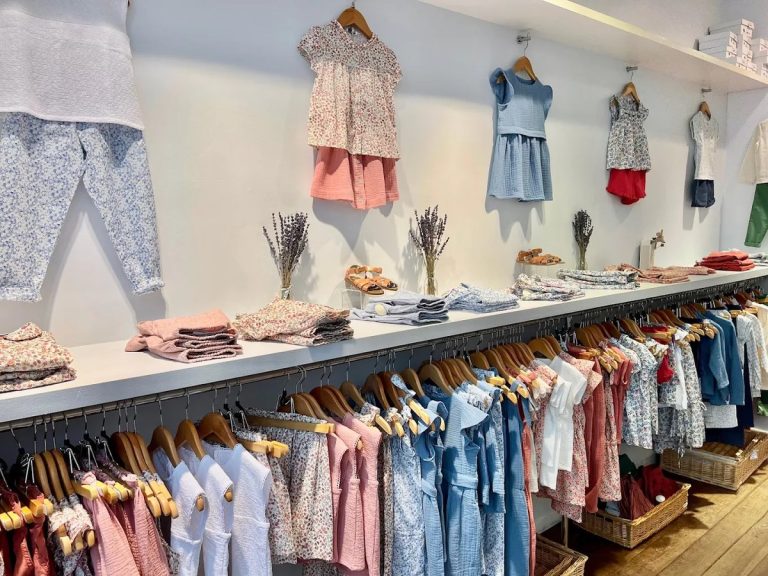
The word “heirloom” gets used loosely in luxury children’s marketing. The pieces that actually pass through generations share a small set of construction features that are not difficult to identify if you know what to look for:
- Natural fibres throughout — cotton, linen, silk, wool. Synthetic blends pill, fray, and lose their colour within the first year.
- French or felled seams — the inside of the garment is finished cleanly, not raw-edged or zigzagged.
- Generous hem allowances — heirloom pieces are constructed with two to three inches of extra fabric folded inside the hem, so a tailor can let them down as the child grows.
- Mother-of-pearl or horn buttons, never plastic. Plastic buttons crack in the wash and date the piece visibly.
- Hand-finished details on yokes, collars, and cuffs — smocking, embroidery, or hand-stitched edging.
The brands that still build this way
The list of children’s brands genuinely worth buying for keeping is shorter than the marketing suggests. The houses our editors return to:
For European heritage
Bonpoint (France, founded 1975), Caramel (UK, founded 1999), Marie-Chantal (UK, founded by Crown Princess Marie-Chantal of Greece in 2001), Tartine et Chocolat (France, founded 1977), Pepa & Co (Spain, founded 2007). All of these houses construct to a standard a tailor would recognise.
For Italian heritage
Il Gufo, Aletta, Monnalisa‘s less embellished pieces, and the under-recognised La Stupenderia from Modena.
For American heritage and hand-knit
Misha & Puff for hand-knitted cotton and merino pieces that pass through three or four children, Briar Handmade for hand-smocked dresses, and Petite Plume for the soft-tailored pyjama and at-home pieces that survive a decade of wash cycles.
The economics on a single garment
Let us run the math on one piece. A Bonpoint girls’ smocked sundress in 2026 costs approximately $235 in the U.S. retail market. The same dress, worn by one child for one summer, then passed to a younger sister for a second summer, then sold on a curated resale platform in good condition, will return roughly $90-$110 on resale. Net cost over four children-summers: approximately $35 per child-summer.
The equivalent fast-fashion children’s sundress at $28 will be worn approximately twelve times before its colours fade and the seam puckers, then be thrown out. Net cost per child-summer: $28. The “luxury” piece is roughly equivalent in cost per actual wear, and the experience of wearing it — for the child, and the parent dressing them — is meaningfully better.
What about second-hand?
The case for buying second-hand heirloom children’s pieces in 2026 is genuinely strong. Curated resale platforms — Vinted Pro, Vestiaire Collective Junior, the dedicated children’s section of The RealReal, and the brand-direct resale program now run by Bonpoint — have transformed the second-hand luxury children’s market. A barely-worn Bonpoint dress at 35-50% of original retail is one of the smartest entry points for parents starting to build a heirloom wardrobe.
The deeper point: fewer, better pieces
The case for heirloom children’s clothing is ultimately a case for a smaller wardrobe. A child who owns six well-made dresses across the season — three for everyday, two for occasions, one for milestone events — will look more put-together than a child rotating through thirty fast-fashion pieces. The smaller wardrobe is the editor’s choice, the photographer’s choice, and increasingly the choice of families who have done the math.