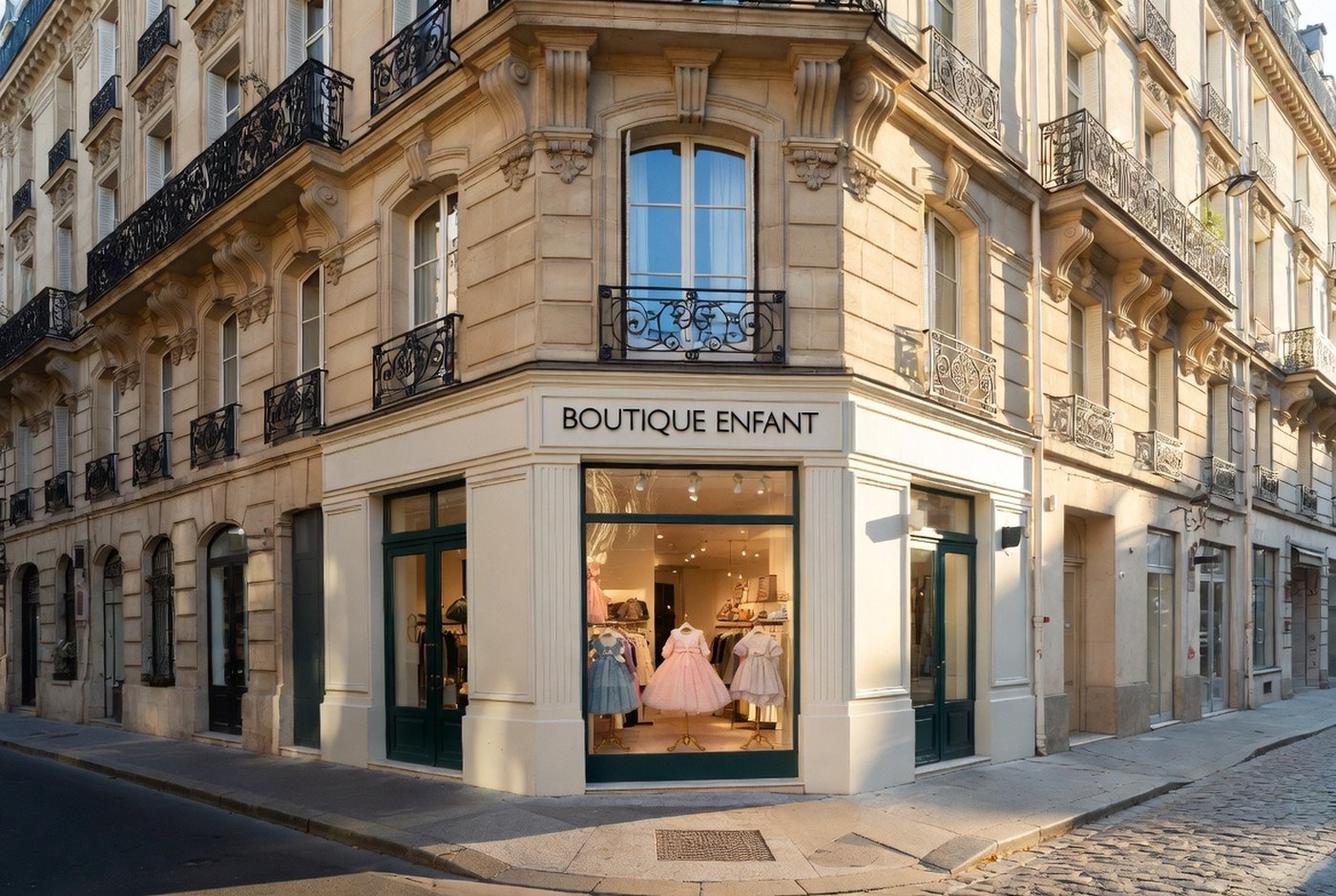
When Marie-France and Bernard Cohen opened the first Bonpoint at 67 Rue de l’Université in 1975, the idea of an editorially serious children’s clothing house, one whose smocked dresses and Peter Pan collars would be photographed in fashion magazines and collected across generations, barely existed. Fifty years later, Bonpoint is the answer to what that idea became
The brand turns 50 in 2025, and the milestone is more than a marketing moment. It is a useful occasion to examine what makes a luxury children’s fashion house actually endure, and what its longevity tells us about the future of the category.
The house that quiet luxury built
Bonpoint’s founding philosophy was unusual for its moment. The 1970s children’s clothing market was either utilitarian, practical, low-cost department-store fare, or it was costume-adjacent: theatrical, overworked dresses meant to be brought out for a christening photograph. Marie-France Cohen, who had three young children of her own, saw a third path. She wanted clothes that respected the proportions of a real child’s body, were made from natural fibres a parent could actually wash, and carried the kind of considered tailoring her own grown-up wardrobe demanded.
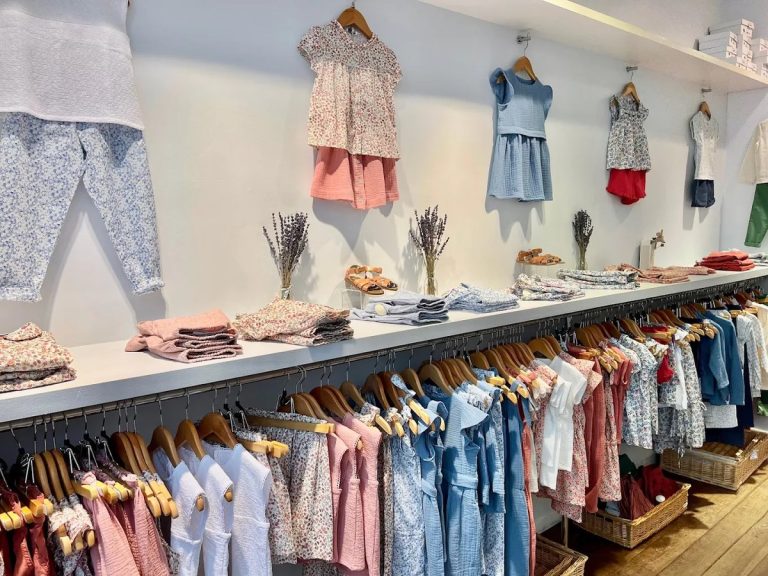
The result was a wardrobe vocabulary the brand has now spent fifty years refining: Liberty-print sundresses, hand-smocked yokes, mother-of-pearl buttons, blanket-stitch finishes, and the soft palette of ivory, ecru, dusk pink and sage green that has become almost shorthand for the European children’s aesthetic.
Why the archive matters
The reason Bonpoint pieces appear in second-hand listings ten and twenty years after purchase, often in better condition than fast-fashion adult clothing two seasons old, is the construction. Hand-smocking, French seams, generous hem allowances designed to let down for a growing child, and natural-fibre lining inside outerwear are not decorative choices. They are durability choices.
Generations of elegant children have grown up wearing Bonpoint, from the Kennedys to the Obamas. The brand’s pieces are widely considered heirloom staples of childhood, and the resale market reflects it: a well-kept Bonpoint smocked dress purchased in 2005 will often fetch 60-80% of original retail in 2026.
The collections that define the era
Three Bonpoint collections are particularly instructive for understanding what the house does well:
- The Summer Smocked Edit, the cornerstone of the brand. Hand-smocked across the yoke, finished in Liberty Tana Lawn or solid Italian poplin, available in sizes from 6 months to 12 years. Editorial consistency across decades.
- The Velvet & Wool Holiday Collection, winter dressing for the Christmas-portrait moment. Quilted Liberty linings, cotton-velvet boys’ shorts, the dresses that show up in family albums for a generation.
- The Beauty Line, a quieter category, but instructive. Marie-France Cohen’s eau de toilette and skincare for children, launched in 1995, are still in production, and the original packaging design has barely changed. The line is profitable precisely because it doesn’t chase fashion.
The Paris flagship, 67 Rue de l'Université
The original boutique remains operational and is one of the most beautifully assembled retail spaces in Paris children’s commerce. It is across the river from the Bonpoint atelier on Rue de Tournon, where the couture pieces (the christening gowns, the milestone-birthday dresses) are still hand-finished. A visit is the right way to understand why this brand outlives the categories that surround it.
If you cannot make Paris, the New York City flagship on Madison Avenue and the London Mount Street boutique offer the closest equivalent of the in-person experience. Both are listed in the Kidrovia directory with notes on each location’s particular strengths.
What Bonpoint's longevity tells us
The luxury children’s market in 2026 is more crowded and more confused than it was at any point in Bonpoint’s first thirty years. The arrival of branded children’s lines from adult fashion houses, Dior, Gucci, Fendi, Versace, has created a generation of parents who confuse logo-density with quality. Bonpoint’s quiet survival across these decades is the case study against that confusion.
What the house has done right, and what the next fifty years of luxury kidswear can learn from: respect the child’s body, build for durability rather than trend, treat color and proportion conservatively, and resist the urge to make every garment a fashion statement. Children grow out of trends. They do not grow out of quality.
For the brands hoping to do for the 2026 generation what Bonpoint did for the 1975 one, the formula has not changed. It just requires patience.
The cult of the smocked dress
If a single garment defines what Bonpoint built, it is the smocked sundress. The construction has barely changed in fifty years. A panel of hand-smocked cotton or Liberty Tana Lawn across the yoke, gathered to a soft cap sleeve, falling to a generous A-line skirt with a deep hem allowance. The piece is built to survive being passed across three or four children, and the construction holds the photograph forever.
Marie-France Cohen was famously specific about the smocking. The hand-stitch had to follow a specific pattern of pleats and embroidery that the original Parisian atelier developed in 1976. The pattern is still used today on the heritage line, executed at the Bonpoint couture atelier on Rue de Tournon by a small team of seamstresses whose average tenure exceeds twenty years. When parents resell these dresses on Vinted or Vestiaire Junior, the visible smocking pattern is what authenticates them.
The retail experience as the marketing
The Bonpoint boutique itself has always been part of the proposition. Walk into the Mount Street flagship in London or the Rue de l’Université original in Paris, and the experience is closer to a Hermès boutique than a children’s store. Soft carpet, considered lighting, hand-folded merchandising on antique armoires rather than racks, and salespeople trained to understand a parent’s specific requirements rather than process a transaction.
The brand has resisted, for fifty years, the pressure to expand into outlets, discount retailers, or unbounded online distribution. Bonpoint is still primarily sold through company-owned boutiques and a tightly controlled set of authorised retailers. The result is that the brand’s pricing has held substantially better than its peers across the past two decades. Resale values reflect it.
The next fifty years
The most interesting question about Bonpoint at 50 is not what it has done, but what comes next. The brand was acquired in 2016 by EPI, the French luxury group that owns Bonpoint alongside Charvet, J.M. Weston, and other heritage houses. Under EPI ownership the brand has expanded its couture offering, broadened the beauty and skincare lines, and opened flagships in Hong Kong, Tokyo, and the Middle East without diluting the brand identity.
What the brand has not yet done, and what the next decade will likely test, is whether the Bonpoint aesthetic translates to a digitally native generation of parents whose first encounter with luxury children’s clothing is through Instagram and TikTok rather than a boutique visit. The brand’s social presence in 2026 is restrained by the standards of the category. Whether that restraint is a strategic advantage or a generational risk is the question Bonpoint’s leadership is now working through. The early signs, particularly the strong response to recent collaborations and the brand’s children’s beauty line revival, suggest the discipline of the first fifty years remains the right answer.